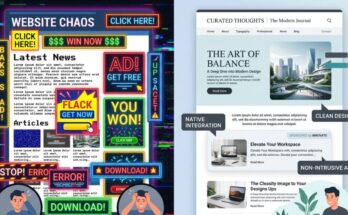
You’re watching your traffic climb, but your ad revenue looks like a flatline. It’s a brutal reality for publishers who rely on traditional banner placements that readers have learned to completely ignore. Banner blindness isn’t just a buzzword; it is a conversion killer that drains your monetization potential every single day.
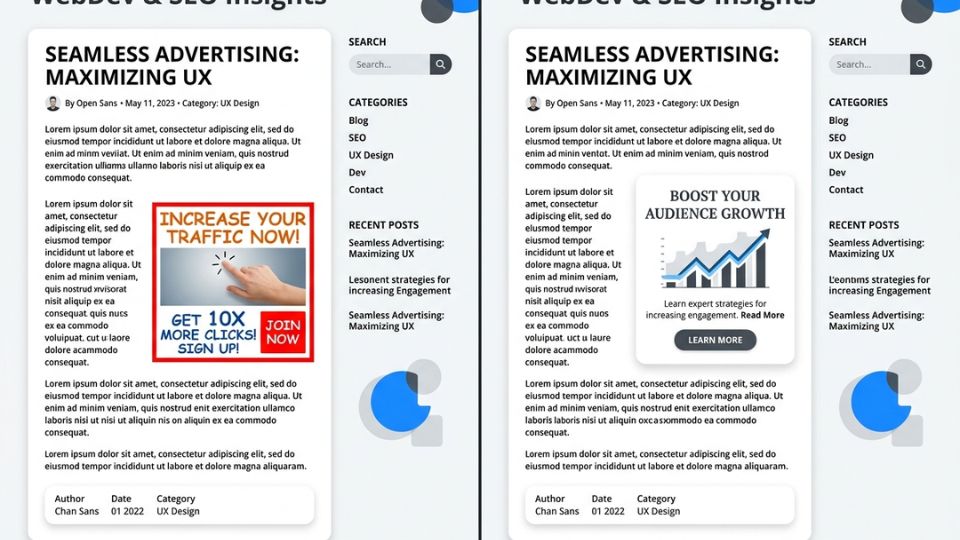
Standard display ads feel like aggressive panhandlers standing on the highway of your content. They disrupt the journey, irritate the driver, and rarely get a second glance. The modern programmatic landscape demands integration, not interruption.
That is where native placements save the day. By mastering the delicate art of optimizing in-content native injections for higher click-through rates (CTR), you turn passive scrollers into active clickers. Let’s dive deep into the specific, tactical engineering required to make your sponsored assets feel like a natural extension of your editorial voice.
The Anatomy of high-performing Native Injections
An in-content native injection isn’t just an ad shoved into a paragraph break. It is a highly calibrated psychological trigger. To win the programmatic game, you have to understand exactly where the reader’s eye travels when they digest an article.
We aren’t just talking about aesthetic alignment here; we are talking about structural synergy. If your ad looks like an alien entity dropped into the middle of a thought, the human brain flags it as spam within milliseconds. Your goal is cognitive harmony.
Matching Typographic DNA
If your site uses Montserrat for body text, your native ad unit shouldn’t render in Arial. Fonts dictate readability and trust. Ensure your CSS overrides match the ad wrapper’s typography precisely to the container it inhabits.
Pay close attention to line-height and letter-spacing metrics too. Even a minor two-pixel variation in line spacing can trigger a subconscious alert in a reader’s brain, signaling that “this content doesn’t belong here.” Smooth transitions lead to higher engagements.
Color Theory and the “Contrast Paradox”
While you want the injection to look native, it still needs to be seen. Total blending creates invisibility, while total contrast creates hostility. The sweet spot lies in using your site’s existing secondary accent color for the ad’s call-to-action (CTA) elements.
Imagine your site uses a deep navy for text and a vibrant teal for hyperlinked resources. By skinning your native injections with that exact teal for buttons, you leverage pre-existing user behavior. The reader already associates that color with valuable, clickable information.
The Mid-Article Sweet Spot: Perfecting Spatial Placement
Where you inject your native ads matters just as much as how they look. Put them too high, and you scare the reader away before they derive any value from your page. Put them too low, and nobody sees them because they’ve already bounced.
Through years of heat-mapping and multivariate testing across high-traffic niches, we’ve found that the early-middle section of a post yields the highest yield. Specifically, you want to target the zone right after the reader has received their first major answer.
| Scroll Depth (%) | User Intent Phase | Optimal Ad Action |
|---|---|---|
| 10% – 20% | Hook & Context Extraction | Keep Clear (Build Trust) |
| 35% – 45% | Value Acquisition (First Solved Pain Point) | Primary Native Injection (Highest CTR) |
| 60% – 70% | Deep Dive / Secondary Nuance | Secondary Injection (Contextual Product Match) |
| 85% + | Conclusion / Next Steps | Recommendation Widget / Outbrain Style Block |
The Critical Third-Paragraph Rule
Never inject a programmatic unit after paragraph one or two. Your user is still evaluating your site’s authority during those initial seconds. Introduce an ad too early, and your bounce rate spikes while your RPM plummets.
Instead, drop your first injection immediately following your first H2 subheader, precisely after its concluding paragraph. The user has just finished consuming a cohesive thought block and is naturally looking for the next point of interest.
Contextual Alignment: The “Bridge” Method
The programmatic ad wrapper must bridge the gap between what was just read and what the ad offers. If your article reviews financial apps, your native injection should ideally serve an offer for a high-yield savings account or budget tracker.
We achieve this by utilizing advanced contextual keyword targeting within our ad server setups. By mapping your content tags to your programmatic demand channels, you ensure the injected ad mirrors the immediate intent of the surrounding text block.
Copywriting Secrets that Drive Programmatic Clicks
The visual wrapper gets the eyes, but the copy seals the deal. Because native injections look like content, their headlines must read like premium content, not late-night infomercials. The tone must remain objective yet compelling.
Forget hype words like “revolutionary,” “shattered,” or “miracle.” US consumers possess highly sensitive marketing filters. They respond to utility, curiosity, and specific data points that promise to solve a distinct problem.
The “Open Loop” Headline Technique
An open loop is a psychological mechanism that introduces a question without immediately providing the answer. Your native headline should state a compelling outcome while leaving the specific methodology shrouded in mystery.
Instead of a headline reading “Buy This Accounting Software Today,” an open-loop approach would be: “The Software Top CPAs Use to Cut Audit Risks by 40%.” The reader feels a subconscious urge to click through and close that information loop.
Micro-Copy and Trust Disclosures
Per Federal Trade Commission (FTC) guidelines in the United States, transparency isn’t optional; it’s a legal necessity. However, how you phrase your sponsored labels heavily impacts consumer interaction patterns.
“Labeling an ad clearly doesn’t destroy your CTR; it actually filters out low-intent clicks, saving your advertiser’s budget and raising your overall eCPM values over time.”
Use clean, tiny labels like “Sponsored,” “Advertisement,” or “Promoted Content” in an 11px gray font directly above the ad card. This fulfills legal compliance while positioning the ad as a premium, curated recommendation rather than a deceptive trick.
Advanced Tech Architecture for Maximizing Viewability
An ad that doesn’t load can’t get clicked. Low viewability scores ruin your standing with premium SSPs (Supply-Side Platforms) and programmatic exchanges, keeping your ad spots trapped in low-paying bid tiers.
To pull down the highest possible eCPMs from Google Ad Exchange and premium networks, your technical setup must be flawless. Your ad containers need to be agile, quick, and perfectly integrated into your site’s rendering pipeline.
Lazy Loading with Smart Layout Shifts
Standard lazy loading can cause Cumulative Layout Shift (CLS) issues, which hurts your Core Web Vitals and damages your Google rankings. If an ad suddenly pops into view, pushing your text downward, the user experiences a frustrating misclick.
To avoid this, always hardcode the aspect ratio and minimum height of your native ad wrappers into your CSS files. By reserving a blank $350px$ or $250px$ block before the script executes, the page layout remains stable while the ad loads seamlessly in the background.
Dynamic Injection Engines vs. Hardcoded Slots
Hardcoding ad blocks into your single.php WordPress file limits your flexibility. If an article is short, your ads cluster together; if it’s long, you miss out on valuable real estate deeper down the page.
Implement a dynamic injection plugin or custom JavaScript engine that counts paragraphs and inserts ads based on word volume. For instance, set a rule to inject a native ad card every 450 words, ensuring a balanced, non-spammy ad density across all viewports.
The ROI of Continuous Testing and Optimization
Optimization isn’t a one-and-done project; it’s an ongoing cycle of measurement and adaptation. What converts beautifully for a personal finance audience might completely bomb on a tech review blog. You must let clean data dictate your layouts.
Run persistent A/B tests on your native wrappers. Test an image-left layout against an image-top layout. Alter button states from flat designs to subtle gradients. Small changes often spark substantial jumps in your aggregate RPM numbers.
The Real-World Impact of Wrapper Tweaks
Let’s look at a hypothetical scenario based on real programmatic management dynamics. A mid-sized digital publisher focusing on US automotive insurance was struggling with a 0.45% CTR on their mid-article sponsored units.
By implementing three distinct changes—matching the site font, switching the CTA text from “Learn More” to “Check Rates,” and introducing a strict layout-stabilized wrapper—their CTR climbed to 1.85% over a 30-day testing window. Their programmatic ad revenue tripled without adding any extra ad density to the page layout.
Tracking the Metrics That Actually Matter
Don’t just stare at gross earnings. Keep your eyes on Page RPM (Revenue Per Mille), CTR, and Active View Viewability. Aim for a viewability score of at least 70% to signal to programmatic buyers that your inventory is premium real estate worth bidding top dollar for.
Elevating Your Site’s Long-Term Revenue Potential
Optimizing in-content native injections for higher click-through rates (CTR) bridges the gap between editorial integrity and raw financial sustainability. You don’t have to ruin your user experience just to pay your hosting bills.
When you respect your readers’ intelligence by building native ad experiences that blend seamlessly into your design architecture, everyone wins. Your audience enjoys a clean, distraction-free reading experience, while your advertisers enjoy clean, high-intent traffic conversions.
Take a hard look at your current monetization setup today. Audit your fonts, review your spatial patterns, and start treating your ad spaces with the same creative respect you give your editorial content. Your bottom line will thank you.
Ready to unlock the true monetization potential of your digital property? Partner with the optimization experts at Advlume to transform your ad inventory into a high-yielding revenue engine today.
Frequently Asked Questions (FAQ)
Will increasing my native ad CTR hurt my organic Google rankings?
Not if you manage your ad placements properly. Google prioritizes user experience and layout stability; by utilizing fixed-height ad containers to eradicate Cumulative Layout Shift (CLS), you protect your SEO health while scaling ad earnings.
What is a good benchmark CTR for in-content native injections?
While standard banner display ads often languish below a 0.1% CTR, properly optimized native ad injections routinely achieve between 0.8% and 2.2% CTR, depending heavily on niche relevance and layout alignment.
Should I use images or text-only formats for my native ad cards?
A hybrid model featuring a high-quality, contextual image alongside a clean headline and micro-copy almost always outperforms text-only setups. Images draw the initial eye focus, while your typography secures the click.
How many native ads should I inject per article page?
As a general rule for premium desktop and mobile experiences, aim for one native injection every 400 to 600 words. Exceeding this threshold risk creating ad fatigue, lowering your viewability scores, and annoying your core audience.
Can I run programmatic native ads alongside traditional Google AdSense?
Absolutely. Most premium publishers stack native demands from networks like TripleLift, Taboola, or Google AdX alongside standard units to create a diverse ecosystem that maximizes overall real estate yields.